Showing posts with label Classical Music. Show all posts

Thursday, July 8, 2010

Are You Sure You Like Classical Music?

This question will sound awkward if directed to a classical musician. Your natural response would be; Of Course I play an orchestral instrument and I am in 3 different orchestras and a string quartet, how can you ask me that? Well, we sure like to play our instruments and practice until our fingers bleed, but, practicing your instrument 8 hours a day means that you like classical music?
I’ll tell you what! How do you feel if I ask you to go to a performance every weekend? I’m pretty sure a lot of musicians will say yes to that! That’s easy! Some of us will say yes but we might make it to a few concerts, and then we start getting lazy and miss the rest of the season. I asked if you are sure you like classical music because sometimes we just don’t go to concert for long periods of time, just because we are lazy. There is no other reason. We like to play our instruments and give concerts but we don’t go to them if we are not playing. Being a complete musician also consist in going to concert and support your colleges. Concerts will increase the amount of repertoire you’ve ever listen, will make you understand better the music you already know, they will help to understand better the style of the composer, and another million things musically speaking. And, by the way, you are supporting “your people”. You want them to listen to your music right? So there is no reason to miss a classical music concert ever again. I propose you to check the schedule of every ensemble around your community and mark it in your agenda. This way you will never forget another concert.
I was like that! I liked to play the violin in everything. I didn’t care with who or which ensemble, as long as I was playing I was happy, it feels good to play my instrument. I missed a lot of concerts because…. you know…. I was careless. I like huge symphonic sounds, I am a total geek of film music so I listen to soundtracks but played classical music. I know!! It sounds really bad! One summer after a music festival, I realize that going to concerts and listening to classical music a bit more will make me a better musician and will help my violin playing. I believe is worth it! Give it a try!


Recent Post

How to Hear Colors in Music
How Important is Good Discipline and Smart Practicing
4 Things Classical Musicians Will Have to Live With….
How do They do it? Write Music
How to Enjoy a Classical Music Concert


Go to the Blog Archive for more Posts!

Monday, July 5, 2010

How Important is Good Discipline and Smart Practicing

Practice makes perfection! That is just a FACT! it is so true that when you work hard in anything that you do you are going to be successful. When you are practicing your instrument you are changing bad habits for good ones. That’s it! There you have the magic of good playing. The main purpose of practice is to sound good, we do it by repeating the same thing over and over. But here is the thing, we cannot repeat just for the sake of repeating, we have to repeat with conscience. We first figure out the problem and then work on it. Take the piece in a comfortable tempi and feel comfortable with it, know that your playing is as perfect as it could get even if it slow. Then speed up 5 clicks on your metronome and do the same thing. Repeat the process until you reach your desire tempi. Always keep in mind the basic things like your sound production, intonation, tempi, rhythm, dynamics, etc.


Sometimes it is very hard to even think about opening your case. When we have to practice, all kind of human necessities show up. We have to go to the bathroom, we are hungry, tired, in pain, just about everything. Once we start everything turns smoother and sometimes you will feel like you want even more and more. But the truth is that if we don't practice we are not going to be better musicians. We have to follow a daily plan and a smart routine. If you want to become a great artist you have to work incredibly hard, but I’ll promise you that all your efforts are going to be worth it. Start by creating a routine for every day and some objectives. If you don't feel like practicing one day you are going to promise that you will force yourself to start with scales and keep going with the rest of your repertoire. No successful person is known by working when he/she feels like, they are all known by taking action at the moment. This is going to be intensive and well planned. I propose you start by setting up your long and short term goals.


This is a list of some of the things that I believe it could improve your practice time


Things to do before practice:
  1. Eat well
  2. Take a nap
  3. Go to the bathroom
  4. Drink something
  5. Listen to a recording of what you are about to play
  6. Read the biography of the composer
  7. Make sure your instrument is ready to go!
  8. Tell your family not to bother you
  9. Remember what you worked on the day before
  10. Prepare yourself for practicing (practice mode)
Things to do when you are practicing:
  1. Focus!
  2. Create daily objectives
  3. Follow your objectives
  4. Don't leave before you finish your objectives
  5. Force yourself if you have to
  6. Take breaks, they help your brain to think smarter and efficiently
  7. Use metronome
  8. Try different tempos
  9. Remember the basics
  10. Set your mind to be alert 100%
Things to do after you practice:
  1. Look for inspiration to keep practicing
  2. Go to concerts
  3. Support a fellow musician
  4. Listen to all different kinds of music
  5. Study the score and the instrumental part without the recording
  6. SUBSCRIBE TO THIS BLOG, I add the Subscribe via Email option! :)

Recent Posts
How Composers Write Music
How to enjoy a Classical Music Concert
4 Things a Classical Musician Will Have to Live With

Friday, July 2, 2010

4 Things a Classical Musician Will Have to Live With…

Classical Music is an amazing genre and one of the more complex forms of art. But, we have to accept that is not one of the top “things to do” among the people. It is our job and duty to make this form of art grow and be part of everybody's life. The following is a list of things that we as classical musicians will have to deal with always.

  • We have to study and work harder or as hard as any other profession.
And this is very true. If we want to make it in to a symphony that is going to cost at least 5 hrs a day for some years. That is before classes, teaching, working and gigs. We will have to pay good teachers for lessons, assist to summer festivals, meet new musicians, try out for auditions and competitions, and a little bit of everything. It is as hard or harder that majoring in medicine. But, it is totally worth it! With our music we’ll touch people’s lives and change them for good. We will feel good after a good performance, competition, gig, masterclass, lesson, etc. because we’ve earn it. There is not a better feeling than winning a competition and get to play with a symphony orchestra behind you. All of our efforts are going to be paid sooner or later. We just have to keep to focus and keep working. 
  • Sometimes people won’t appreciate what we do 100%
If you say you are a musician you are not going to impress many people by saying it, and this is of course because of their ignorance. They don't know what is to be a concert violinist or a classical guitarist. For them you will be as smart as their neighbor who can play 3 chords in his guitar. We have to let them know and explain them how hard we work, how expensive are music schools, how hard is to make it in to a symphony, how much you have to practice, and how happy being a musician makes you. This is not like being in a garage band, classical music is a serious business.
  • A classical musician will probably have a few jobs (in music)
To live out of music we might need to have 2 or more jobs. Playing at wedding on weekends its not going to pay all the bills. We might have to teach, play in orchestra, chamber music, popular music, compose, arrange, conduct, orchestrate, etc. So while you are at school don't be afraid of taking that conducting class, or complementary composition, it might be useful later.
  • It is likely that in our careers at some point we will reconsider being in the music business
There will be moments of frustration, doubt, and bad thoughts about being in the music business. After a bad audition, you might feel horrible. After a bad recital you might start thinking “ Is this really for me?” I am not successful. It happens to all of us…..  but the truth is that if we really love music and that is the only thing you see yourself doing for the rest of your life, you don't have to be scared of anything. YOU ARE GOING TO BE SUCCESSFUL ! Don't forget it! This is definitely for you. When you love what you are doing you are going to be happy and successful, 2 things people need in order to have a good life.
The classical music world is very small, it happened to me before  that when I meet a musician he/she is very likely to know someone I know somewhere else in earth. So I would say, have as many musician friends as you can, it will be a benefit for your career, and avoid confrontations because they can be harmful later in the future.

Tuesday, June 22, 2010

How to Hear Colors in Music


If you are a musician or if you are involved somehow in the music industry, chances are that you’ve heard more than once this expression “ …..and the orchestration was brilliant, those colors!!!….” Maybe this is the first time you hear about colors in music, either way I will try to give you a basic introduction on what is it when we talk about colors in music. Often, composers and orchestrators refer to colors in music when they are talking about a certain feeling or sensation in a specific piece of music. They use that expression to explain someone else what they did in that excerpt of music, how they worked on it, and why they did it that way. James Horner is a prominent film composer who recently scored the Avatar movie. I’ve seen a lot of his interviews and he always talk about how he combine colors to create a specific feeling or mood. Since the primary purpose of music in film is to serve the moving images, music colors have a very important role. The different combinations of musical instruments in a specific scene make it seem darker or more brilliant, sad or happy, it is just about how the composer combine the musical instruments to achieve the work of supporting the movie with music effectively. So, we can say that colors in music are based in how we combine the musical instruments.
Lets imagine we are orchestrators and we already know all the ranges of the instruments of a symphony orchestra (their highest notes and their lowest), we know how to balance the orchestra well in terms of which instruments sounds louder than the others naturally. We are going to orchestrate the music for the movie Cast Away, the main character is in an island and he just lost his best friend "Wilson” a volleyball that went away by accident at sea. He is crying and trying to reach the ball but it is moving away too fast, and the scene its 3 minutes long all about the main character trying to reach his best friend. We have to choose the right colors to support that scene, we suddenly think about something peaceful but sad not too much passion or hysterical attitude but with pain. We know that the oboe would be perfect as a melody carrier in its middle register because it has a warm sound. Next step is to compose a sad melody for the oboe that fits the scene (remember, middle register for warm quality) With the perfect accompaniment we could make that scene unforgettable . But what could be the accompaniment? As orchestrators we know that the brass family would be to loud for this scene and the woodwind family will sound too homogeneous to the solo oboe and the melody could be lost. The String Family could be our solution, they have a mellow sound, and played in a soft dynamic can let the oboe rise and sing above the entire section. But we need a deep sound to support the oboe since that scene definitely required it, we know that if we choose basses, cellos and violas in their lower register to create long harmonies could work.Violins in their higher register wouldn’t be very appropriate for this cue due to its brightness in their color, but maybe as unison with the viola section in a moderate register would create a richer sound.


So we can say that in this particular case the composer chose this 2 colors from the palette which is the symphony orchestra . That dark sound created by the lower strings its the first color and the oboe above the harmony the second color. Those 2 colors where chosen by the composer or orchestrator to support the scene effectively but a different composer could have picked another 2 colors or maybe add a third one. Maybe he could’ve had the solo trumpet as the melody and a combination of woodwinds and strings as the accompaniment. The cue will still be effective but it would evocate a different mood in the person. As you get more experience as a composer/orchestrator it will come to you naturally.Colors are sonorities, when we hear a flute in its high register and an oboe also in its high register we could tell them apart by their colors, the oboe will have a more nasal sound, that is their natural color while the flute sound is more sweet. Classical music composers like Maurice Ravel and Igor Stravinsky are better known by their tremendous orchestrations. They knew the orchestra so well that they developed an incredible sensibility to sounds and colors, they could practically create anything they had in their minds.

Monday, June 14, 2010

Key Signatures Affects our Soul

Do you feel like this?

from Christian Schubart's Ideen zu einer Aesthetik der Tonkunst (1806)

C Major
Completely Pure. Its character is: innocence, simplicity, children's talk.

C Minor
Declaration of love and at the same time the lament of unhappy love. All languishing, longing, sighing of the love-sick soul lies in this key.

Db Major
A leering key, degenerating into grief and rapture. It cannot laugh, but it can smile; it cannot howl, but it can at least grimace its crying.--Consequently only unusual characters and feelings can be brought out in this key.

C# Minor
Penitential lamentation, intimate conversation with God, the friend and help-meet of life; sighs of disappointed friendship and love lie in its radius.

D Major
The key of triumph, of Hallejuahs, of war-cries, of victory-rejoicing. Thus, the inviting symphonies, the marches, holiday songs and heaven-rejoicing choruses are set in this key.

D Minor
Melancholy womanliness, the spleen and humours brood.

Eb Major
The key of love, of devotion, of intimate conversation with God.

D# Minor
Feelings of the anxiety of the soul's deepest distress, of brooding despair, of blackest depresssion, of the most gloomy condition of the soul. Every fear, every hesitation of the shuddering heart, breathes out of horrible D# minor. If ghosts could speak, their speech would approximate this key.

E Major
Noisy shouts of joy, laughing pleasure and not yet complete, full delight lies in E Major.

E minor
Na�ve, womanly innocent declaration of love, lament without grumbling; sighs accompanied by few tears; this key speaks of the imminent hope of resolving in the pure happiness of C major.
F Major
Complaisance & Calm.

F Minor
Deep depression, funereal lament, groans of misery and longing for the grave.

F# Major
Triumph over difficulty, free sigh of relief utered when hurdles are surmounted; echo of a soul which has fiercely struggled and finally conquered lies in all uses of this key.

F# Minor
A gloomy key: it tugs at passion as a dog biting a dress. Resentment and discontent are its language.

G Major
Everything rustic, idyllic and lyrical, every calm and satisfied passion, every tender gratitude for true friendship and faithful love,--in a word every gentle and peaceful emotion of the heart is correctly expressed by this key.

G Minor
Discontent, uneasiness, worry about a failed scheme; bad-tempered gnashing of teeth; in a word: resentment and dislike.

Ab Major
Key of the grave. Death, grave, putrefaction, judgment, eternity lie in its radius.

Ab Minor
Grumbler, heart squeezed until it suffocates; wailing lament, difficult struggle; in a word, the color of this key is everything struggling with difficulty.

A Major
This key includes declarations of innocent love, satisfaction with one's state of affairs; hope of seeing one's beloved again when parting; youthful cheerfulness and trust in God.
A minor
Pious womanliness and tenderness of character.

Bb Major
Cheerful love, clear conscience, hope aspiration for a better world.

Bb minor
A quaint creature, often dressed in the garment of night. It is somewhat surly and very seldom takes on a pleasant countenance. Mocking God and the world; discontented with itself and with everything; preparation for suicide sounds in this key.

B Major
Strongly coloured, announcing wild passions, composed from the most glaring coulors. Anger, rage, jealousy, fury, despair and every burden of the heart lies in its sphere.
B Minor
This is as it were the key of patience, of calm awaiting ones's fate and of submission to divine dispensation.

Translated by Rita Steblin in A History of Key Characteristics in the 18th and Early 19th Centuries. UMI Research Press (1983).

Saturday, June 12, 2010

The History of the Bass (Humor)

The History of the Bass - !!Funny!!
by Tony Levin


In the beginning there was a bass. It was a Fender, probably a Precision, but it could have been a Jazz - nobody knows. Anyway, it was very old ... definitely pre-C.B.S. And God looked down upon it and saw that it was good. He saw that it was very good in fact, and couldn't be improved on at all (though men would later try.) And so He let it be and He created a man to play the bass. And lo the man looked upon the bass, which was a beautiful 'sunburst' red, and he loved it. He played upon the open E string and the note rang through the earth and reverberated throughout the firmaments (thus reverb came to be.) And it was good. And God heard that it was good and He smiled at his handiwork. Then in the course of time, the man came to slap upon the bass. And lo it was funky. And God heard this funkiness and He said, "Go man, go." And it was good.
And more time passed, and, having little else to do, the man came to practice upon the bass. And lo, the man came to have upon him a great set of chops. And he did play faster and faster until the notes rippled like a breeze through the heavens. And God heard this sound which sounded something like the wind, which He had created earlier. It also sounded something like the movement of furniture, which He hadn't even created yet, and He was not so pleased. And He spoke to the man, saying "Don't do that!"
Now the man heard the voice of God, but he was so excited about his new ability that he slapped upon the bass a blizzard of funky notes. And the heavens shook with the sound, and the Angels ran about in confusion. (Some of the Angels started to dance, but that's another story.) And God heard this - how could He miss it - and lo He became Bugged. And He spoke to the man, and He said, "Listen man, if I wanted Jimi Hendrix I would have created the guitar. Stick to the bass parts."
And the man heard the voice of God, and he knew not to mess with it. But now he had upon him a passion for playing fast and high. The man took the frets off of the bass which God had created. And the man did slide his fingers upon the fretless fingerboard and play melodies high upon the neck. And, in his excitement, the man did forget the commandment of the Lord, and he played a frenzy of high melodies and blindingly fast licks. And the heavens rocked with the assault and the earth shook, rattled and rolled.
Now God's wrath was great. And His voice was thunder as He spoke to the man. And He said, "O.K. for you, pal. You have not heeded My word. Lo, I shall create a soprano saxophone and it shall play higher than you can even think of." "And from out of the chaos I shall bring forth the drums. And they shall play so many notes thine head shall ache, and I shall make you to always stand next to the drummer." "You think you're loud? I shall create a stack of Marshall guitar amps to make thine ears bleed. And I shall send down upon the earth other instruments, and lo, they shall all be able to play higher and faster than the bass."
"And for all the days of man, your curse shall be this; that all the other musicians shall look to you, the bass player, for the low notes. And if you play too high or fast all the other musicians shall say "Wow" but really they shall hate it. And they shall tell you you're ready for your solo career, and find other bass players for their bands. And for all your days if you want to play your fancy licks you shall have to sneak them in like a thief in the night." "And if you finally do get to play a solo, everyone shall leave the bandstand and go to the bar for a drink." And it was so.

Thursday, June 10, 2010

How Unique are Classical Music Composers? (Humor)

 The Mozart Effect: Makes a child smarter and more mathematical along with a higher IQ
The Haydn Effect: Child is witty and quick on his feet, quite often bringing a grin to the faces of those around him. Despite this he exhibits remarkable humility.
The Bach Effect: Child memorizes Scripture and says his prayers every day; may overwhelm listeners with his speech.
The Handel Effect: Much like the Bach Effect; in addition, the child may exhibit dramatic behavior.
The Beethoven Effect: Child develops a superiority complex and is prone to violent tantrums; is a perfectionist.
The Liszt Effect: Child speaks rapidly and extravagantly, but never really says anything important
The Bruckner Effect: Child speaks very slowly and repeats himself frequently. Gains a reputation for profundity.
The Grieg Effect: This child is quirky yet cheery. May be prone toward Norwegian folklore.
The Wagner Effect: Child becomes a megalomaniac. Speaks for six hours at a stretch.
The Schoenberg Effect: Child never repeats a word until he has used all the other words in his vocabulary. Sometimes talk backwards or upside-down. Eventually people stop listening to him. Child blames them for their inability to understand him.
The Ives Effect: Child develops a remarkable ability to carry on several separate conversations at once.
The Stravinsky Effect: Child is prone to savage, guttural and profane outbursts that lead to fighting and pandemonium in preschool.
The Shostakovich Effect: Child only expresses themselves in parent-approved ways.
The Cage Effect: Childs says exactly nothing for 4 minutes and 33 seconds. Preferred by 9 out of 10 classroom teachers.
The Glass Effect: Child repeats one word over, and over, and over, and over....


More....
http://www.classicalmusicarticles.com/2010/05/how-to-keep-conductor-in-line.html

Monday, June 7, 2010

Chamber Music History

 
           Originally, chamber music referred to a type of classical music that was performed in a small space such as a house or a palace room. The number of instruments used were also few without a conductor to guide the musicians. Today, chamber music is performed very similarly in terms of the size of the venue and the number of instruments used. Typically, a chamber orchestra is composed of 40 or fewer musicians. Because of the limited number of instruments, each instrument plays an equally important role. Chamber music differs from a concerto or a symphony because it is performed by only one player per part.
Chamber music evolved from the French chanson, a vocal music comprising of four voices accompanied by a lute. In Italy, the chanson became known as canzona and evolved from its original form of vocal music into instrumental music often adapted for the organ.
During the 17th century, the canzona evolved into the chamber sonata performed on two violins plus a melody instrument (ex. cello) and harmony instrument (ex. harpsichord).
From the sonatas, specifically the trio sonatas, (ex. works by Arcangelo Corelli) evolved the string quartet which uses two violins, a cello and viola. Examples of string quartets are works by Franz Joseph Haydn.
In 1770, the harpsichord was replaced by the piano and the latter became a chamber music instrument. The piano trio (piano, cello and violin) then emerged evident in the works of Wolfgang Amadeus Mozart, Ludwig van Beethoven and Franz Schubert.
In the late 19th century, the piano quartet (piano, cello, violin and viola) emerged with the works of such composers as Antonín Dvorák and Johannes Brahms. In 1842, Robert Schumann wrote a piano quintet (piano plus string quartet).
During the 20th century, chamber music took on new forms combining different instruments including the voice. Composers such as Béla Bartók (string quartet) and Anton von Webern contributed to this genre.

Saturday, June 5, 2010

Petrucci Music Library- Free Classical Music Library

The Petrucci Music Library is an internet-based collaborative music score library, and is currently the main project. You will find tens of thousands of scores composed by thousands of composers here, all available for free download.

Our goal is to create a virtual library containing all public domain music scores, as well as scores from composers who are willing to share their music with the world without charge. The Petrucci Music Library also encourages the exchange of musical ideas, both in the form of musical works and in their analysis. Feel free to post your analysis of a particular piece on the "discussion" pages, or join our forums for interactive discussion with the community.

Website:
http://imslp.org/wiki/

Friday, June 4, 2010

3 Ways to Find Classical Music

Getting into classical music can be a challenging task, especially for those who are unfamiliar with Bach, Mozart, and even Beethoven. Luckily, thanks to the marvels of modern technology, something that was once time consuming and rather intimidating, is now as simple as pushing a button. These few, but simple tips, can open up an abundance of classical music for you to listen, examine, and enjoy.
Tip #1
  • Napster: My number one choice for finding music, I use Napster every day. You can find just about anything you want here - Bach, Mozart, Liszt, Beethoven, Handel, etc... You can search by artist, composer, title, and album. Napster also offers a classical music radio - a large list of randomly selected classical works. Napster has a free version from which to listen(www.free.napster.com), however the sound quality is less than CD quality, so some of the subtle nuances of the music is lost. The subscription service has several plans, but the lowest priced plan is just $5 a month.
Tip #2
  • iTunes: If I find a song or an album I really like on Napster, in most cases, I can buy it directly from iTunes and transfer it to my iPod or burn it to a CD to listen to in the car.
Tip #3 When you're out shopping at Wal-Mart, Target, K Mart, Best Buy, or any other major retailer, you can find great classical music compilation CDs. These CDs usually feature "Most Popular" works and "Greatest Works of All Time" spanning the many periods and styles of classical music. You're sure to find something you'll like on one of these albums, in which case you can begin searching for other works by the same composer.

Thursday, May 27, 2010

Understanding Classical Music

Understanding classical music is something most people think is far too lofty a goal, one best left for music scholars and academics in their ivory towers. It's the epitome of stuffiness; black ties and diamond earrings must be worn at all times.
This is not at all the case!
Classical music should be heard and appreciated by all people. Composers were and are real people who struggle with the same problems we all do, including paying bills, satisfying their clients, and just existing from one day to the next.
It's not necessary to understand composition techniques, orchestration principles, and the intricacies of arranging music to be awed by its beauty. Just let it wash over you and absorb the feelings!
The genius of Bach, the magnificence of Beethoven, the sheer beauty of Chopin, and the power of Prokofiev are all waiting to be discovered by you, no matter how much you know or don't know about music theory and history.
Do you turn away from a rainbow, bemoaning that you don't understand light refraction and color prism?
Of course not!
If you drive a car, do you understand fuel injection, and rack and pinion steering?
I think I've made my point.
However, some knowledge of Western art music helps understanding classical music even more. Why did Beethoven write his symphonies, why did Bach love the fugue, did Mozart really hate the flute?
But if you don't have time to pursue a Doctorate of Musical Arts in Music History, what can you do?
An easy and fun way to learn about anything is via an audio book.
Audio books are the educational tool for the 21st century.
  1. You can listen anywhere you want to--in the car, in the doctor's waiting room, at a soccer game, lounging in bed--you name it. No more boring classrooms.
  2. You can use odd bits of time that would otherwise be wasted.
  3. You can listen to any part over again without having to raise your hand and ask a question in class.
  4. Audio books are portable--no 10-ton text book to lug around, just a little MP3 player or Ipod.
  5. Audio books are less expensive than a printed text. No trees have to die.
  6. Audio books are private--just pop in an ear plug.
  7. Audio books are entertaining. They come alive with fascinating narration, great music, and tantalizing sound effects.

Thursday, May 20, 2010

10 Famous Violinists (Alive) in the Classical Music World

Itzhak  Perlman
Israeli violin virtuoso, conductor, and master-instructor. He is widely considered as one of the preeminent violin virtuosi of the 20th century.

Perlman was born in Tel Aviv, in what was soon to be Israel, where he first became interested in the violin after hearing a classical music performance on the radio. He studied at the Academy of Music in Tel Aviv before moving to the United States to study at the Juilliard School with the great violin pedagogue, Ivan Galamian, and his assistant Dorothy DeLay.
Perlman contracted polio at the age of four. He made a good recovery, learning to walk with the use of crutches. Today, he generally uses crutches or an Amigo POV/Scooter for mobility and plays the violin while seated.


Joshua Bell
is an American Grammy Award-winning violinist.


Selected Discography
  • Angels & Demons Original Motion Picture Soundtrack, 2009


    Joshua Bell, featured violinist
    Music composed by Hans Zimmer


  • Antonio Vivaldi: The Four Seasons, Sony BMG Masterworks, 2008


  • Defiance OST, 2008


  • The Red Violin Concerto, Sony BMG Masterworks, 2007


Hilary Hahn 
Hahn began playing the violin one month before her fourth birthday in the Suzuki Program of Baltimore's Peabody Conservatory She participated in a Suzuki class for a year. Between 1984 and 1989 Hahn studied in Baltimore under Klara Berkovich. In 1990, at ten, Hahn was admitted to the Curtis Institute of Music in Philadelphia where she became a student of Jascha Brodsky. Hahn studied with Brodsky for seven years and learned the études of Kreutzer, Ševčík, Gaviniès, Rode, and the Paganini Caprices. She learned twenty-eight violin concertos, recital programs, and several other short pieces.


Janine Jansen
 is a classical violinist born in January 7, 1978 in Soest in the Netherlands.
She has eschewed tradition by recording with only 5 solo strings rather than an orchestra, including her brother as cellist and father playing continuo. In live concerts, she has received standing ovations from enthusiastic audiences, such as in the Berlin Philharmonic Orchestra 2006 concert in Berlin's Waldbühne Amphitheater, with a full attendance of 25,000, and in Los Angeles at the Walt Disney Concert Hall with the Los Angeles Philharmonic Orchestra in 2008 to a sold out audience.


Sarah Chang

Chang has performed with the Los Angeles Philharmonic, the NHK Symphony Orchestra of Tokyo, the Hong Kong Philharmonic Orchestra, the Bayerische Rundfunk Orchestra, the Washington National Symphony Orchestra, the Oslo Philharmonic, the Pittsburgh Symphony Orchestra, the Melbourne Symphony, Orchestre de la Suisse Romande, Orchestre Philharmonique de Luxembourg, the San Francisco Symphony Orchestra, the Orchestre National de France, the Honolulu Symphony, and the Netherlands Radio Philharmonic Orchestra amongst others.


Viktoria Mullova

is a Russian violinist. She is best known for her performances and recordings of a number of violin concerti, compositions by J.S. Bach, and her innovative interpretations of popular and jazz compositions by Miles Davis, Duke Ellington, The Beatles, and others.


Maxim Vengerov

Born on 20 August 1974 in Novosibirsk, Russia, to a family with musical tradition. At the age of 5, he began studying the violin with Galina Tourkhaninova, and two years later – with Zakhar Bron. 1984 saw the 10-year-old Maxim go abroad for the first time; in Lublin, Poland, he won the 1st prize at International Karol Lipiński and Henryk Wieniawski Young Violin Player Competition (years later, he recalled, "I thought Poland was somewhere at the end of the world. One does not forget such trips; no wonder I always remember Poland very fondly…").


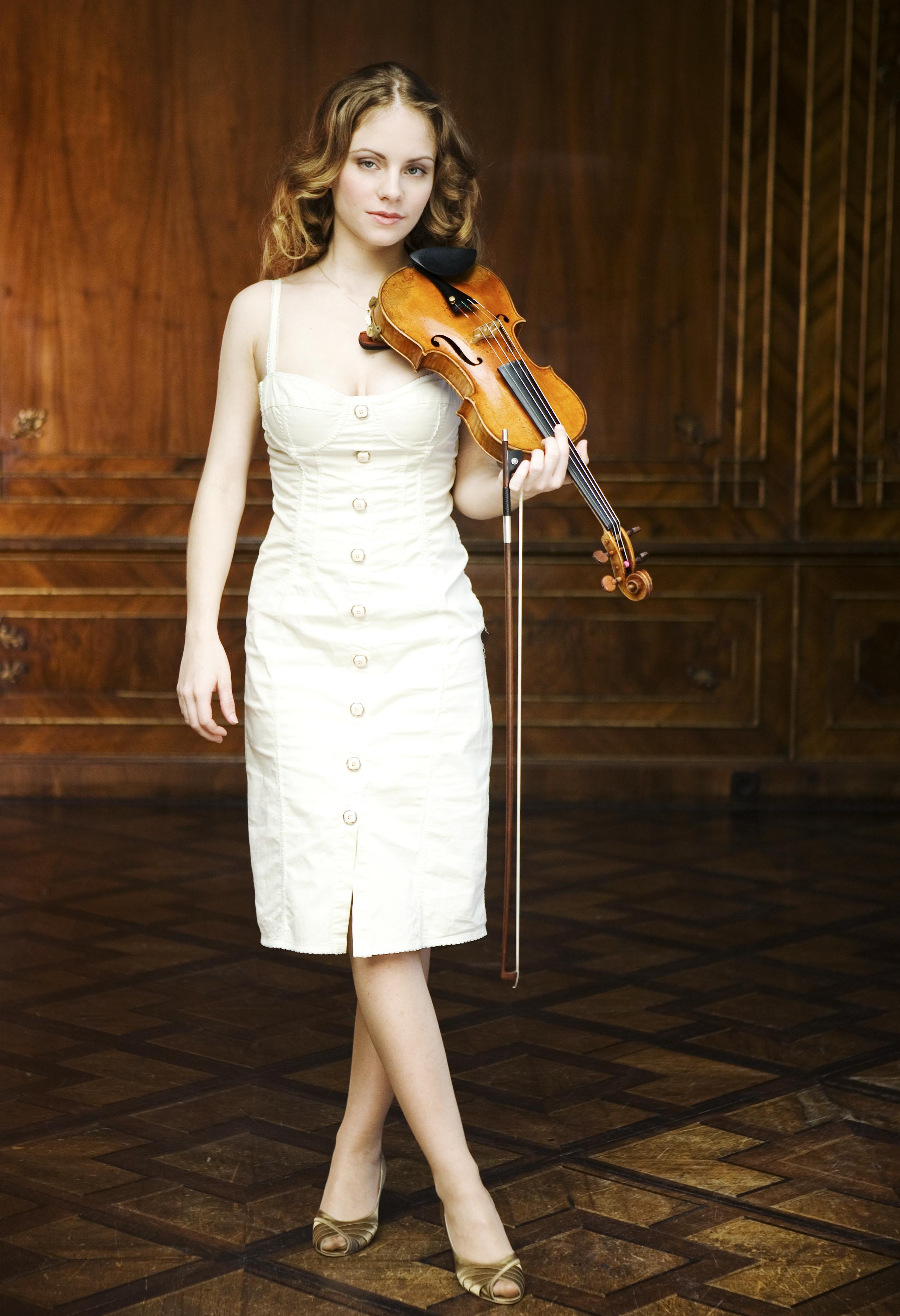
Julia Fischer

born in Munich, Germany.
Fischer began her studies before her fourth birthday, when she received her first violin lesson from Helge Thelen; a few months later she started studying the piano with her mother, Viera Fischer. Fischer said, "my mother's a pianist and I wanted to play the piano as well, but as my elder brother also played the piano, she thought it would be nice to have another instrument in the family. I agreed to try out the violin and stayed with it." She began her formal violin education at the Leopold Mozart Conservatory in Augsburg, under the tutelage of Lydia Dubrowskaya. At the age of nine Julia Fischer was admitted to the Munich Academy of Music, where she continues to work with Ana Chumachenco.


Anne Sophie Mutter

Mutter was born in Rheinfelden, Germany. She began playing the piano at age five, and shortly afterwards the violin, studying with Erna Honigberger, a pupil of Carl Flesch. Upon Honigberger's death, she continued her studies with Aida Stucki, at the Winterthur Conservatory.
After winning several prizes, she was exempted from school to dedicate herself to her art. When she was 13, conductor Herbert von Karajan invited her to play with the Berlin Philharmonic. In 1977, she made her debut at the Salzburg Festival and with the English Chamber Orchestra under Daniel Barenboim. At 15, Mutter made her first recording of the Mozart Third and Fifth violin concerti with von Karajan and the Berlin Philharmonic.


Midori Goto


is a Japanese American violinist. She made her debut at the age of 11 in a last minute change of programming during a concert by the New York Philharmonic under Zubin Mehta highlighting young performers. When she was 21, she formed the philanthropic group Midori and Friends to help bring music to children in New York City. She is internationally renowned as a performer. In 2007, she was selected as a UN Messenger of Peace.

Tuesday, May 18, 2010

Conductor's Role in Classical Music

What is a conductor?:

A conductor is someone who leads and guides an orchestra or a group of singers in order to perform a piece to the best of their abilities. Conductors work in theater or stage plays, film or TV scores, lead orchestras and choirs that are either amateurs or pros.


What does a conductor do?:

The conductor makes sure that the music piece is interpreted properly by acting as the guide to the musicians or singers. He chooses and studies the music score, may make certain adjustments to it and relay his ideas to the performers so that when the music is played, there is unity and harmony. He schedules rehearsals, plans the orchestra's repertoire and attends to other matters concerning the group he leads.


 Basics of conducting


                          Conducting Patterns


James Horner (film composer) conducting music for the Avatar movie.


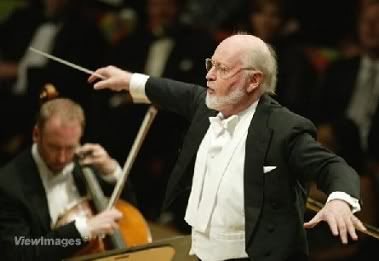
John Williams (Film Composer) 


Further Reading:


Music review: Three 'conductors' save the day for Los Angeles Chamber Orchestra


What Music Conductors and Directors do!


Strong Female Conductors


Friday, May 14, 2010

Perfect Pitch: Can we develop it?

 Perfect Pitch is the ability to hear a music note and identify it right away. It is also someone that can hear harmonies, clusters and any given sound and be able to write it down for multiple purposes. The majority of the musicians are Relative Pitch, this is when someone can recognize a given note for example "A" and find his or her way around the other notes using intervals.


-Musicians who are used to "playing by ear" are masters of the Relative Pitch.

- Many arrangers, orchestrators and composers have Perfect Pitch, they can hear the score in their heads, this will help them organize their ideas without any problem, they know how it would sound like.


We know that we can develop Relative Pitch with some training, but the question is:


Can we develop Perfect Pitch?  
 
Some people say you have to be born with this gift......
Other say that you either have it, or not......
I have never heard you can develop it other than the courses they sell online,


but will they work? Have anyone tried it?


Post your answers!!


Perfect Pitch vs. Relative Pitch


This are some common abilities of a PERFECT PITCH person.
  • Identify by name individual pitches (e.g. A, B, C♯) played on various instruments
  • Name the key of a given piece of tonal music just by listening (without reference to an external tone)
  • Identify and name all the tones of a given chord or other tonal mass
  • Sing a given pitch without an external reference
  • Name the pitches of common everyday noises such as car horns
  • Identify the numerical value in hertz of a given note.


 On the other hand this are some common abilities of a  RELATIVE PITCH person.

  • the distance of a musical note from a set point of reference, e.g. "three octaves above middle C"
  • a musician's ability to identify the intervals between given tones, regardless of their relation to concert pitch (A = 440 Hz)
  • the skill used by singers to correctly sing a melody, following musical notation, by pitching each note in the melody according to its distance from the previous note. Alternatively, the same skill which allows someone to hear a melody for the first time and name the notes relative to some known starting pitch.
  • developed through intense training, practicing hearing differences between major, minor, diminished, and augmented intervals


Check if you have Perfect Pitch:

http://perfectpitchtest.com/

Tuesday, May 11, 2010

Orchestration

What is Orchestration?


     Orchestration is the study or practice of writing music for an orchestra or for any musical ensemble. An orchestrator have the entire orchestra in his head. He knows every single instrument, their ranges, how they blend with each other, and especially how to combine the instruments wisely so that they have the perfect balance in volume. Often, composers write a piano version or a small instrumentation of what is later going to be a full orchestra piece. They focus in the music, the art of creating it and the inspiration. Composers don't want do be thinking what blends well or if the orchestra is to loud. After the writing process is done, they start orchestrating the music. In film music they have orchestrators waiting for the composer to hand the original ideas. Studios often have several orchestrators so that the process can be fast. We have to keep in mind that in this business everything is about time.


Ennio Morricone (film composer) was asked at a seminar why he doesn't hire an orchestrator, his response was, "Did Beethoven need an orchestrator? Did Bach?"


Orchestration is a form of compositional art. One can orchestrate a piece a million different ways. Which is the right way???


    Great Orchestration Books

  • Michael Praetorius (1619): Syntagma musicum volume two, De Organographia.
  • Valentin Roeser (1764): Essai de l'instruction à l'usage de ceux, qui composent pour la clarinette et le cor.
  • Hector Berlioz (1844): Grand traité d’instrumentation et d’orchestration modernes (Treatise on Instrumentation).
  • François-Auguste Gevaert (1863): Traité general d’instrumentation.
  • Charles-Marie Widor (1904) : Technique de l’orchestre moderne (Manual of Practical Instrumentation).
  • Nikolay Rimsky-Korsakov (1912): Основы оркестровки (Principles of Orchestration).
  • Cecil Forsyth (1914): Orchestration.
  • Alfredo Casella: (1950) La Tecnica dell'Orchestra Contemporanea.
  • Charles Koechlin (1954–9): Traité de l'Orchestration (4 vols).
  • Walter Piston (1955): Orchestration.
  • Samuel Adler (1982, 1989, 2002): The Study of Orchestration
  • Alfred Blatter (1997) : Instrumentation and Orchestration (Second edition).


Monday, May 10, 2010

Classical Music vs. Film Music


Is Film Music the New Classical Music?


VS.


          Some people know what a symphony orchestra is because they went to the movies and watched Star Wars or Lord of the Rings or some other major movie, and after the movie they googled how this amazing music was made. Then, they find out that it was recorded by a symphony orchestra! In our minds we make the connection (symphony orchestra-classical music) unconsciously, because we've seen so many ads and promotional signs were they are announcing a classical music concert with the picture of a symphony orchestra. General people (non-musicians) are more likely to hear a symphony sound in the theater than in a concert halls. This is why professional orchestras are taking the initiative to have pop concerts and program some film music in their season. They will reach more audiences and at the same time promote the classical concerts.


Valery Gergiev, Russian Conductor


I believe that film music is an art, like classical music. It is just a different process of thinking the music. A film composer writes his music with the picture in mind trying to serve the moving images, while the classical composer can work more with inspiration and doesn't have any "limitations". They use the same compositional techniques, they have to know all about orchestration, harmony, counterpoint, music forms, and other significant details to achieve the same goal. The creation of music.


"The job of a composer, whether in film or the classical genre, is to create music which fulfills its function....these functions can be and have been synonymous and interchangeable." 

                                                                                     -Anonymous


"If Richard Wagner had lived in this century, he would have been the number one film composer."

                                                                                    - Max Steiner


Links:

Film Music Magazine article no.1
Film Music Magazine article no. 2
Analyzing Classical Music and Film Music with Examples


www.scoringsessions.com

Friday, May 7, 2010

The World's Greatest Symphony Orchestras

We will take a look at the World's top 20 Symphony Orchestras.

The panel, which was formed by music critics [Gramophone Magazine, the New Yorker, Los Angeles Times, Die Presse(Austria), Le Monde (France), Die Welt (Germany), and other major news companies] have considered the question from all angles:

               - judging concert performances as well as recording outputs, contributions to local and national communities and the ability to mantain iconic status in an increasingly competitive contemporary climate.

                                                                     - The Gramophone Magazine


Gramophone: World's Best Symphony Orchestra

A click on the orchestra label will redirect to their websites.


20  Czech Philharmonic


19 Saito Kinen Orchestra


18 Metropolitan Opera


17 Leipzig Gewandhaus


16 St. Petersburg Philharmonic


15 Russian National Orchestra


14 Mariinsky Theatre Orchestra


13 San Francisco Symphony


12 New York Philharmonic


11 Boston Symphony Orchestra


10 Dresden Staatskapelle


9 Budapest Festival Orchestra


8 Los Angeles Philharmonic


7 Cleveland Orchestra


6 Bavarian Radio Orchestra


5 Chicago Symphony Orchestra


4 London Symphony Orchestra


3 Vienna Philharmonic


2 Berlin Philharmonic


1 Royal Concertgebouw (Orchestra) 


 Luviu Prunaru
Concertmaster Royal Concertgebouw Orchestra


Royal Concertgebouw Orchestra


(Cesar) The question it self is very controversial but I think this a very accurate list. I would move a few orchestras down and some up, but the top 2 orchestras should definitely be Royal Concertgebouw and Berlin Phil. I am surprised that Chicago Symphony got number 5 (the first American Orchestra)of the list, the Cleveland Orchestra was my first guess for the first American Orchestra.


Is your favorite orchestra in the top 20 ????

Sunday, May 2, 2010

Is "Classical Music" the Appropiate Term for the Genre?


What is Classical Music?

When asked the question, “what is classical music?”, elevator music comes to the minds of many people. Although it is grossly inaccurate to say that classical music is elevator music, the two terms are similar in one way. They are both a generic term applied to a type of music.

  • Classical music encompasses many styles of music spanning over 700 years. The term is used colloquially to describe a variety of western musical styles from the ninth century to the present.


  • But, should we use "classical music" referring to the music of  Ludwing van Beethoven or Pyotr Ilyich Tchaikovsky ?


*For me, classical music is just a period in time, when music evolved in certain ways from what it was in the baroque period. Some people call it concert music. I think that is a great term, maybe it could be instrumental music as well. But that will remind us the genres of new age and jazz. What do you think?


Periods of European art music

 
Early
Medieval       (500–1400)
Renaissance     (1400–1600)
Baroque     (1600–1760)
Common practice
Baroque     (1600–1760)

Classical     (1730–1820)
Romantic     (1815–1910)
Modern and contemporary
20th-century     (1900–2000)
Contemporary     (1975–present)
21st-century     (2000–present)


Main characteristics of the classical period 

1 Classical music has a lighter, clearer texture than Baroque music

2 Less complex. It is mainly homophonic- melody above chordal accompaniment 

3 Variety and contrast within a piece became more pronounced than before

4 The orchestra increased in size and range

5 The main kinds were sonata, trio,string quartet,symphony,concerto ,serenade and divertimento.

6 Melodies tended to be shorter than those of Baroque music, with clear-cut phrases and clearly marked cadences. 


Do you think the term "classical music" is appropriate for the genre?


Recommended:


Top 10 Symphonies You Should Own

http://classicalmusic.about.com/od/classicalmusic101/tp/symphonylist.htm

Thursday, April 29, 2010

5 Reasons Why You Should Like Classical Music


1 It Helps Your Brain Activities


When you listen to classical music, you can fine tune your brain to:
  • Improve memory
  • Control pain
  • Enhance creativity
  • Increase motivation


2 Reduce Stress and Anxiety

In a hospital study, researchers found that heart patients received the same anti-anxiety benefits from listening to 30 minutes of classical music as they did from taking the drug Valium.


3 Has a Positive Effect on Your Linguistic Abilities

Researchers had found that those who listened to Vivaldi while exercising had increased scores on verbal fluency tests after their workouts compared to those who exercised without music.


4 It Will Make You Smarter

Listening to Mozart (especially the piano concertos) may temporarily increase one's IQ and produce many other beneficial effects on mental function.


5 It is the most complex of all the music genres

Classical music can be explained by professional musicians who analyze the structure, harmony, form and orchestration of a piece. It takes a considerable amount of knowledge and technique to work in depth the structure of classical music and perform it with great level of understanding.This is why classical musicians are more likely to play any other music genre very easily.


Recommended Reading: